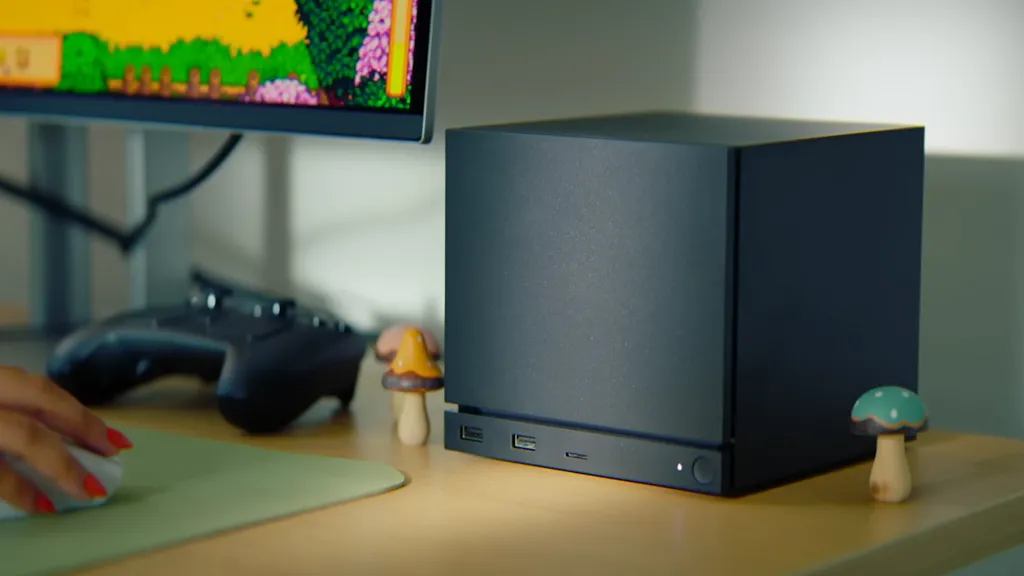
A new era in the Steam universe: preparing for 2026 with Steam Machine, Steam Controller and Steam Frame
Some gaming news instantly makes you realise that this is not simply a new device; it is an ecosystem move. Valve has reignited its hardware laboratory after years of silence. Three technologies lie ahead: Steam Machine, a PC/console hybrid for the TV; Steam Controller, a candidate to redefine PC controls; and Steam Frame, effectively a gaming computer worn on your face.
Steam Machine – Valve's quiet console comeback
Why did the first Steam Machine fail?
- Fragmented manufacturers meant no common standard.
- Underpowered hardware undermined value for money.
- SteamOS was immature.
- The console market was locked down during the PS4/Xbox One era.
Valve entered the battlefield with a sword while its rivals brought tanks.
The new Steam Machine: a genuine system
As discussed in the original November 2025 article, Valve targeted performance six times that of Steam Deck, console simplicity with PC flexibility, a mature SteamOS 3.x Linux base and a living-room experience.
Expected specifications at the time
- Custom AMD Zen 5/5c-based APU.
- 1–2 TB NVMe storage.
- 16–32 GB LPDDR5X RAM.
- 4K60 target.
- Silent and performance modes.
- Steam Deck UI adaptation.
These were expectations and predictions in the original article, not independently confirmed current specifications.
Steam Controller – when controls change, games change
The first Steam Controller was revolutionary but difficult to configure, its haptics felt unusual and games lacked full support. It became a cult favourite instead of achieving mainstream success.
New controller features discussed in the original
- New joystick technology, potentially Hall Effect or another magnetic sensor to address stick drift.
- Large touchpads offering mouse precision for RTS and MMOs.
- Up to 35 hours of battery life as reported in the article.
- Additional shoulder triggers for FPS and RPG play.
- Fully customisable layouts, from Baldur's Gate 3 presets to Path of Exile mapping and Diablo IV one-handed builds.
Steam Frame – more than VR
Steam Frame is designed like a VR headset, but need not be limited to VR. The original describes local library games, 2160 × 2160 per eye, a custom Qualcomm/Valve processor, lightweight wireless design, hybrid 2D/VR and a Steam Deck-like interface.
Imagine playing Skyrim and suddenly finding yourself at the centre of a role-playing table. It can bring conventional games from your library to a huge virtual screen.
What might be possible?
- Baldur's Gate 3 on a virtual 180-inch screen.
- Diablo IV dungeons as an IMAX-like experience.
- Combining atmosphere and screen while playing Vampire: The Masquerade in dark mode.
Valve's new ecosystem in 2026
- Steam Deck: the travelling player.
- Steam Machine: the living-room player.
- Steam Frame: the cinema on your head.
- Steam Controller: one controller to rule them all.
Together, these four devices promise to free PC gaming from the desk and let experiences move across forms.
Conclusion
Valve's quiet preparations and ambitious hardware trio suggest a broader change in gaming culture. Games can be worn, played in the living room, transformed through streaming and customised through controllers. This is more than a collection of new devices.
Historical commentary originally published in November 2025; future-facing claims should not be read as confirmed present-day specifications.